
| |
|
|

|
Porcupine
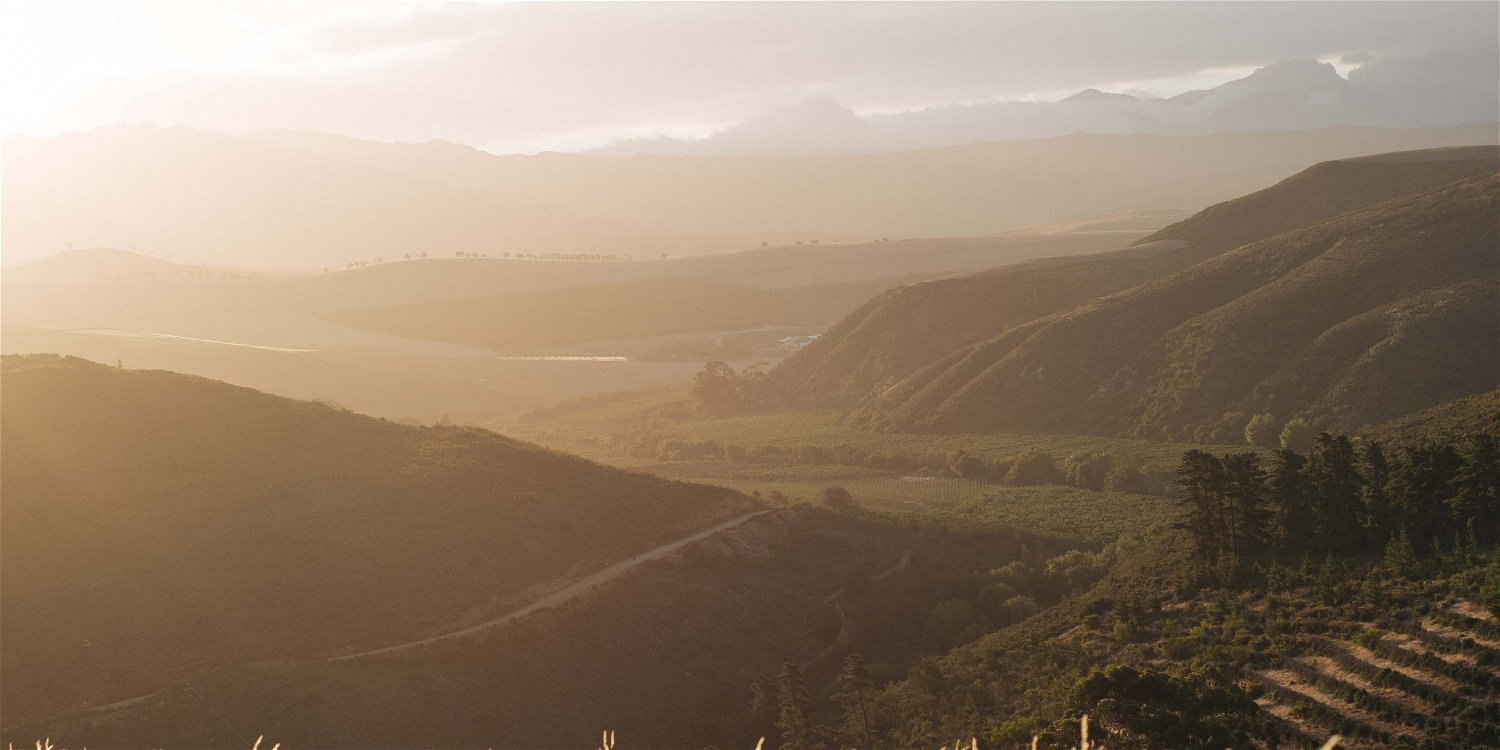
Hills Olive and Guest Farm is situated within
the Groenlandberg Conservancy, in the Overberg. Although
the 220 hectare property is a designated private nature
reserve, Porcupine Hills is also a working olive farm
and we pressed our first oil in the fall of 2004.
The guest cottages are situated throughout the property
and are each entirely private and unique. We work
hard to insure that the reserve, the farm and the
guest facilities comingle peacefully and productively.
There are two rivers running through the property,
the Botriver and the Kloof River. In addition to the
colonial style main residence, there are five cottages
on the property.
READ
MORE
Murray Weiner
purchased Porcupine Hills (then Diepklowe Nature
Reserve) in early 2000. Inspired by Fiona’s
sister in Tuscany and under the advice of local
agricultural experts who assured them that olive
groves were easy to maintain and wouldn’t require
pesticides, four varieties were planted. Other
farming forays included sutherlandia, pelegonum,
and artichokes, but nothing grew as dynamically
as the olive trees. Without much farming experience,
no one was more surprised than the owners when
the Overberg oil was even richer than its Tuscan
cousin.
Murray had been
working in the Okavango Delta for many years
managing safari lodges and training guides.
He is a pro-active conservationist and is involved
with Cape Nature in their stewardship program.
He is Chairman of the Groenlandberg Conservancy
which stretches from the Grabouw/Elgin Valley
to Botrivier and across to the Hottentots Holland
Reserve. Although his first love is the bush,
Murray is also a trained chef and opened a restaurant
on the farm in November of 2005. Quite small
initially, and generally to serve the guest
houses, Murray’s reputation as an innovative
and exciting restaurateur has spread and the
restaurant has been opened to the public and
expanded to seat 50. Porcupine Hills has proven
itself an appealing venue for weddings and special
functions as well.
Fiona hails from
San Francisco and met Murray while on safari
in Botswana with her mother in 1999. She had
previously worked in the film industry for directors
Francis Ford Coppola in San Francisco and David
Lynch in Los Angeles. She moved to New York
in 1994 to work for a film studio’s public relations
department, but was quickly lured into a boutique
PR agency working for some of the country’s
most celebrated chefs. It was here that she
was able to really hone her own cooking skills
and develop a very distinctive Califonian style.
She also put in a stint at Conde Nast Publications
and VOGUE Magazine. After years in the whirlwind
of New York City, Fiona settled into the Hamptons,
where she was living when she went on safari.
Fiona and Murray
married on a beach in Anguilla, British West
Indies, in December 1999. They have a daughter
Olivia (born 2001) and a son Jack (born 2003).
The family also includes a little red dog named
Rory, and even littler dog named Pancho, AFila
Brasiliero,Balthazar and a new Edition ,Leo
, A Basset Hound. The farm’s menagerie consists
of a chicken coop, and a constant rotation of
animals being rehabilitated. |
|
|
With
an emphasis on simple, refined luxury, all of the cottages
at Porcupine Hills Guest Farm are fitted with 100% cotton
percale bed linens and down duvets, sumptuous bath towels,
pool towels, top of the line bathroom amenities, underfloor
heating and ceiling fans, and fresh flowers. Fridges
come stocked with cold drinks, beer and wine, and guests
may take fresh produce and eggs from the farm whenever
available. Porcupine Hills has packages for full service,
self-catering and B&B. Please contact us for our
rates.
Contact us to tailor make a package
to suit your needs.
READ MORE |
|
The
farm has a large olive grove and the first fruit was
harvested in 2004. Four varieties of olives were planted:
frantoio, lecciano, coratino, and FS17. The result is
a lovely and piquant oil that has received myriad praise
in South Africa and abroad. Olive farming is a relatively
young industry in South Africa, but the climate has
proven to be ideal and the cultivation of both table
olives and oil olives is gaining notoriety throughout
the international market. Porcupine hills has a small
vegetable and herb production, including Artichokes,
leeks, parsley and seasonal produce depending on the
time of year.
READ MORE |
|
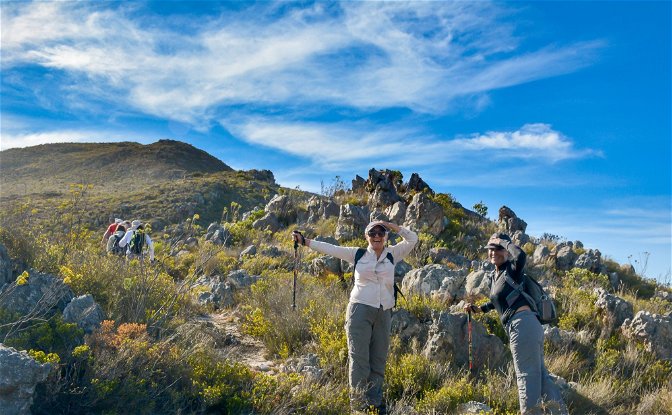
Diepkowe
Private Nature Reserve was created in the 1980's to
preserve both the vegetation and the wildlife. Common
residents include klipspringer, greysbok, bontebok,
bat-eared fox, cape fox, caracul, mongoose, polecat,
genet, baboon, cape hare, and of, course, porcupines.
The rolling hills and mountains of the farm are covered
with a rich diversity of indigenous vegetation, including
Fynbos and Renosterbos. Fynbos includes shrubs such
as heaths and ericas, proteas and leafless reedy plants
such as restios. The non-fynbos vegetation occuring
on the farm is the Renosterveld. Botanists from Kirstenbosch
Botanical Gardens are currently doing research on the
Renosterveld on the farm as there is major concern to
protect the remaining Renosterveld in the Cape. Much
of this vegetation has been turned to farmland and very
little remains.
READ MORE |
|
|